
Why Dogs Become Reactive and What You Can Do About It
Barking, lunging and spinning on the leash are not stubbornness. They are a message. Here is what reactivity means, where it comes from, and the calm plan we use to change it.
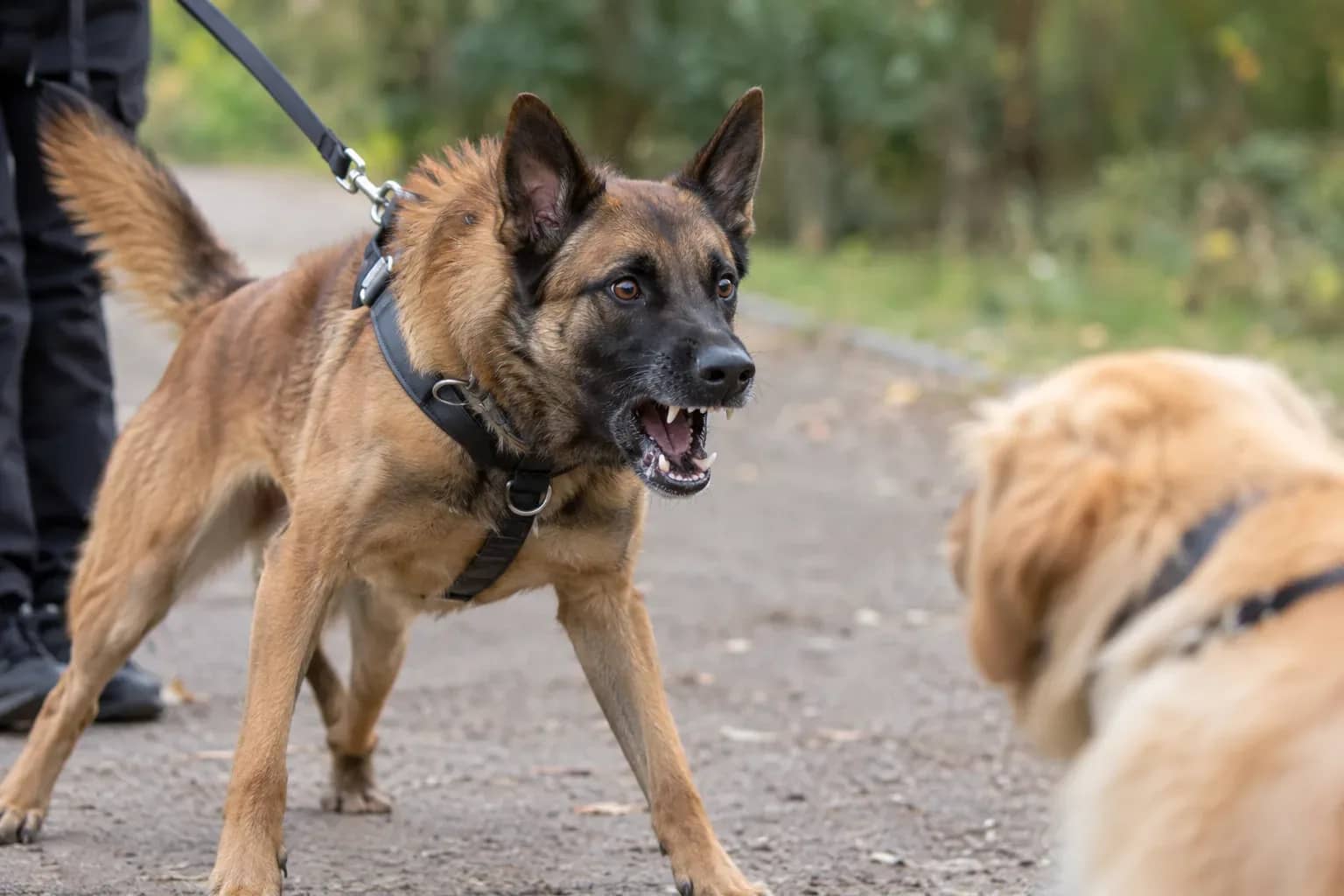
You know the scene. Another dog appears at the end of the street and yours explodes: barking, lunging, spinning at the end of the leash, deaf to everything you say. Walks become a route planned around what you might meet. People who live with a reactive dog often feel embarrassed and alone, and the usual labels, stubborn, badly trained, aggressive, do not help at all. In our experience reactivity is a message, not a character flaw. The dog is telling you that a situation is beyond what it can handle right now. Once you read it that way, the way out becomes much clearer.
What reactivity looks like
“Reactive” covers a range of behaviors that share one thing: the dog's body is tense and its attention is locked on a trigger. It can show up as:
- barking, growling or lunging at dogs, people, bikes or cars while on the leash;
- spinning, whining or frantic movement the moment the trigger appears;
- pulling away, trying to hide, or bolting;
- freezing and shutting down completely.
Before the outburst there are almost always smaller signals: constant scanning of the surroundings, a stiff gait, lip licking at rest, yawning, fur rising along the back, ears pulled back and upright. Those small signs are where the real work happens. By the time the dog is lunging, it is too late for a quiet word.
Why dogs become reactive
Dogs react this way in situations they perceive as unsafe, unpredictable or out of their control. The causes we see again and again:
- Missed socialization. Between 8 and 12 weeks a puppy learns to meet people, children, other animals and city noise without fear. Puppies that miss that window often never feel at ease with unfamiliar things and run a high risk of growing anxious, fearful or aggressive later.
- Pain or illness. A dog that hurts has a short fuse. If the reactivity appeared suddenly, see your vet before you do any behavior work.
- Frightening experiences. One bad meeting with an aggressive dog, or a harsh correction delivered at the wrong moment, can link an ordinary thing like a cyclist or a child with fear.
- Too much pressure, too soon. Dragging a nervous dog into the middle of a busy park to “get it used to it” usually does the opposite.
- A chaotic home and an unbalanced owner. Dogs read our energy before our words. A tense hand on the leash tells the dog there is something to be tense about.
There is also a natural moment to watch for. Around five months, at the end of the sensitive socialization period, many puppies start treating unfamiliar things as threats and either flee from them or confront them. Punishing that reaction only deepens the fear.
What does not work
Three things we ask owners to stop on day one:
- Pulling back on the leash. The dog leans into the resistance and gets more aroused. The leash stays loose, with at most a quick check that goes slack again.
- Yelling. To the dog it sounds like you are joining in.
- Punishment after the fact, and any electric collar. The dog links the pain with whatever it was looking at, often the very dog, person or child you wanted it to accept.
We also do not try to talk a dog out of its fear by waving treats under its nose while it is already over the edge. The dog may learn to put up with the situation, but it does not learn to move through it with confidence. Rewards belong to calm moments.
What works: calm leadership at the right distance
Dogs follow leaders, not commands. A reactive dog needs an owner who decides where to go, how close to come and when to leave, calmly, every single time. This is how we structure it:
- Find the edge. Work at a distance where your dog can see the trigger and still respond to you. That is the only place it can learn. Over weeks, not days, shorten the distance.
- Read first, act early. At the first signal, ears going back, fur rising, body stiffening, give one firm, low “NO” and change direction. Not ten of them. One, then act.
- Use the ground. An aroused dog's best friend is a DOWN. It calms the instincts and makes the dog feel smaller. Practice SIT and DOWN daily at home so they hold up outside.
- Reward within two seconds. When the dog looks at the trigger and then back at you, mark it with a warm “GOOD JOB” and a treat straight away. A late reward loses the link.
- Keep sessions short. Twenty minutes, before a meal, when motivation is highest. End on a success.
- Protect your dog. Avoid places where you are likely to meet an aggressive dog, and let greetings happen naturally, by sniffing, on a loose leash.
Build the foundation first
Reactivity rarely improves on its own. It improves when the whole relationship changes: you go first through doors, the dog sits before meals, walks happen at heel on a loose leash, and the dog gets enough exercise to burn off the energy that otherwise comes out at the end of the leash. That is why we work on the basics before we work on the triggers. The structure is described on The Stevelic Method page, and our guide to reading your dog's body language will help you catch the early signals.
What to do today: take one walk without correcting anything. Note the first signal your dog gives before it reacts, and the distance at which it can still hear you. Tomorrow, start there. If your dog has bitten, or its behavior changed suddenly, involve your vet and a professional trainer. Some things should not be handled alone.
Comments
No comments yet. Be the first.