Instinctive Drives in Dogs and How to Control Them
Dogs do not reason, they react. Understanding the instinctive drives in dogs, prey, food, guarding, play, is the first step to managing them calmly instead of fighting them.
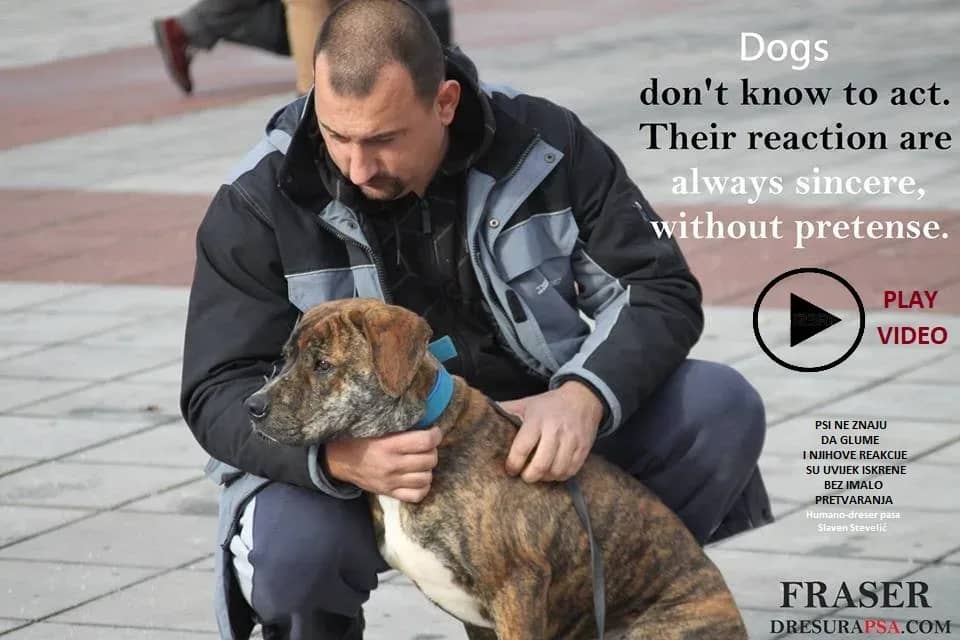
Your dog is not thinking about what happened yesterday or planning tomorrow. Right now it is asking one question: is this friendly or is it a threat, and do I fight, run, or avoid? One of the biggest mistakes an owner can make is assuming the dog feels and reasons the way we do. The instinctive drives in dogs are the real engine of behavior, and once you understand them you stop arguing with your dog and start leading it.
Dogs live entirely in the present
Dogs have emotions, but theirs exist in the moment, as a reaction to what is happening now. That has two practical consequences. First, a correction or a reward that comes even a minute late means nothing to the dog; it connects your reaction to whatever it is doing at that second. Second, you cannot reason with a dog or appeal to its feelings. With children we work through emotion. With dogs we get results through persistence, calm assertion of our will, and a steady demeanor.
Slaven likes to compare a dog to an eighteen-month-old child: it will never act “smartly” on its own, and it will always act on instinct. That is not an insult to dogs. It is the key to living well with them.
The drives you are dealing with
Everything a dog does is driven by instinct. The main ones you will meet every day:
- Prey drive: the chase. The cat, the cyclist, the ball, the sleeve of your jacket.
- Food drive: the strongest lever you own, and the reason we train before meals.
- Guarding drive: the bowl, the toy, the couch, the yard, and sometimes the owner.
- Pack drive: the need for a leader and a place in the hierarchy.
- Play, running, marking, and mating drives.
Some dogs have very strong drives and some have weak ones; the same goes for dominance. You cannot train away a dog’s character. What you can do is manage it by controlling the instincts, and that is the whole purpose of obedience work.
Your energy is the first control
Dogs are tuned to the energy we project long before they decode our words. Tell your dog to sit with no real intent and it will not. Approach it genuinely intending for it to sit, and it will, even if you use the wrong word. When we are calm and composed, our dogs are calm. When we are rattled, they sense the instability and instinctively keep their distance. In a pack an unbalanced dog is corrected quickly; since our dogs cannot correct us, they avoid us, and that is when behavior problems appear.
So the first rule of instinct control has nothing to do with the dog. If you are in a bad mood, skip the session. We explain this in depth in balanced energy between you and your dog.
Managing drive through play
Play is where instincts are switched on deliberately, which makes it the safest place to practice switching them off. Tie a cloth to a rope, swing it in circles, call the dog’s name and say HOLD. Let the dog catch the “prey” and feel like a winner. Then say NO. The dog must release immediately. Reward the release within two seconds with a treat or a second toy and the game continues.
Watch the drive climb as you play. The moment you feel it shift from play into something harder, end the game with a loud NO. If you let the drive escalate past that point, it is too late for NO; a dog in full prey drive loses judgment and can bite its own owner without meaning to. Play only as long as you intend to, and you decide when it ends. Toys come out when you choose and go away afterward; a toy left on the floor is prey the dog owns.
Everyday exercises that calm the instincts
- SIT and DOWN with circles. Put the dog in a down and walk slow circles around it, even step over it. The movement stirs its instincts and it learns to hold still anyway. Reward only when you return to it; never call it to you from a down.
- Food as a resource. Nothing is eaten until at least one command is completed. SIT before every meal shows the dog you are the better hunter.
- You go first through doors. Every door, every day. A WAIT at the threshold is instinct control in its simplest form.
- The self-control toss. Hold the line, toss a treat, say NO before the dog moves. When it waits calmly, it gets the treat and a second one as a bonus.
- A long line, always. Do exercises at short distances on a line so the dog never gets the chance to make an independent decision you did not sanction.
For dogs with a strong dominant streak these exercises are not optional, and the order matters; see training a dominant dog.
What to do today
Respect your dog’s instincts. Let a dog be a dog. Then learn to follow your own instincts instead of your intellect, because your dog will follow a calm leader long before it follows an explanation. Before the next meal, ask for one SIT, wait a full breath, and only then put the bowl down. That is instinct control, and it starts tonight. The full approach is on The Stevelic Method page.
Comments
No comments yet. Be the first.