
Why We Never Use Electric Collars on Dogs
Shock collars stop behavior through pain, and the pain gets linked to whatever the dog was looking at. Here is why we never use them and what works instead.
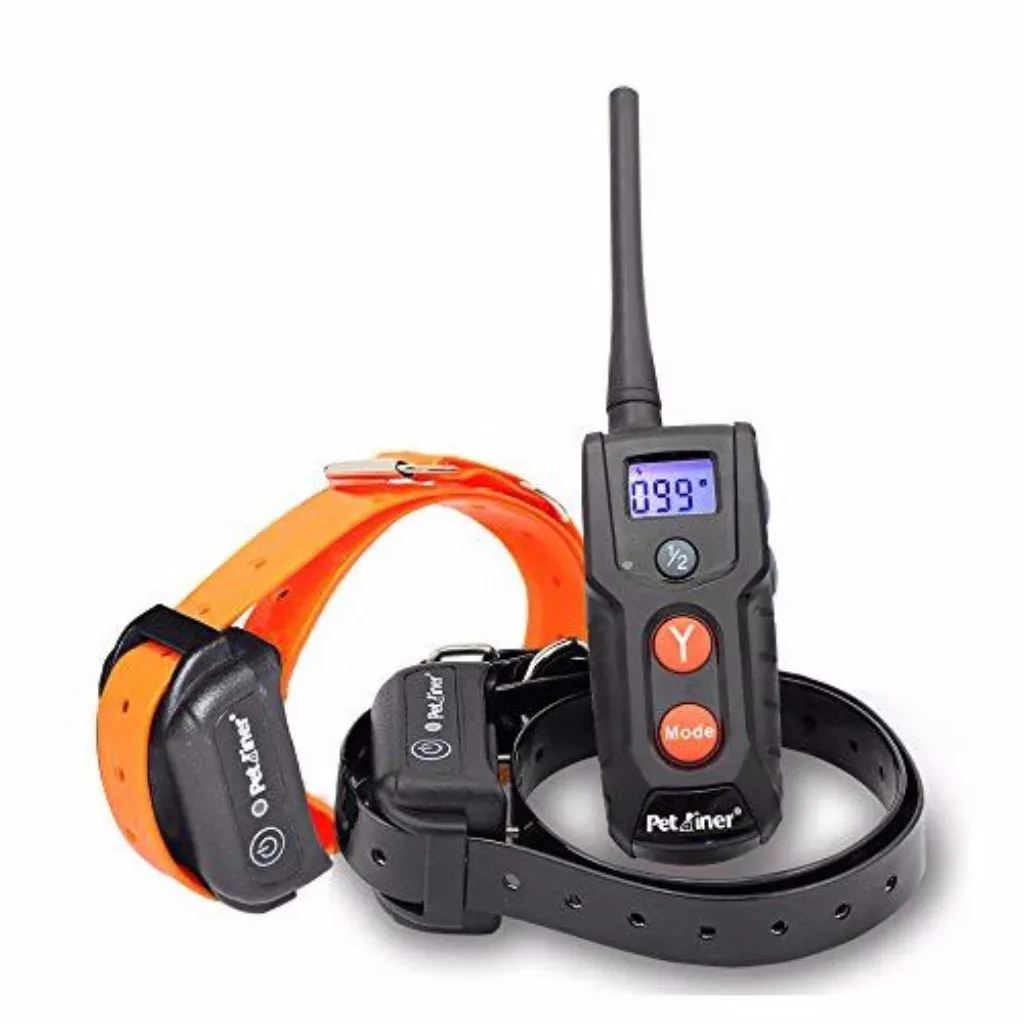
Every few weeks someone writes to us asking whether a shock collar would “finally fix” their dog’s barking, pulling or running off. We understand the frustration behind the question. But our answer is always the same, and it has been the same for thirty-five years: we never use electric collars for dogs, we never recommend them, and a dog trained with one has not been trained. It has been frightened into silence.
What the collar actually does
An electric collar looks like an ordinary collar with a small box attached. Two metal electrodes push through the fur and press against the skin of the neck. When the owner presses a button on a remote, or when the collar detects a bark, the electrodes deliver an electric shock. Manufacturers are notoriously secretive about the exact voltage, but the figures that do surface range from roughly 1,500 to 4,500 volts, and some devices go higher.
Let us be honest about what that means. For the collar to work at all, the pain has to be strong enough to change behavior. That is the whole design. Dogs that wear these devices regularly can also show burns on the neck where the electrodes sit. There is no gentle version of this.
Why it backfires
A dog’s body handles stress the way ours does. Stress raises cortisol and sets off a cascade of other changes, and elevated cortisol is itself linked to more aggressive behavior. So the shock may stop the barking today, and it very often creates a new and bigger problem tomorrow.
The deeper issue is association. A dog does not reason about cause and effect the way we do. It links the pain to whatever it was looking at in that instant. Picture a dog running toward a child in the park, meaning only to say hello, that gets shocked at that exact moment. In its mind, the child caused the pain. That is how a friendly dog becomes a dog that is wary of children, then one that growls at them. The same happens with other dogs, with cyclists, with the neighbor’s cat. The collar does not teach the dog what you want. It teaches the dog that the world hurts.
Researchers who have studied these collars have also found long-term effects: in some cases the dog continued to associate its owner with fear and anxiety well after the shocks had stopped. Even the warning beep many collars give can leave a dog anxious, because it has learned what the beep predicts.
Fear is not obedience
This is the heart of The Stevelic Method. Dogs do not follow commands. They follow leaders. A dog that obeys out of fear is not following you; it is avoiding pain, and the moment the collar comes off, or its drive climbs high enough, the behavior comes straight back. A dog that follows you because you are the calm, consistent leader in its life obeys with its tail low and wagging, and that obedience holds when it matters: at the roadside, around another dog, when a child runs past.
Slaven puts it this way: punish a dog for failing a command and you get a dog that obeys out of fear and slowly withdraws into itself. Reward the dog for getting it right, and you get a partner.
What we do instead
Every problem people try to solve with a shock has a humane solution that works better and lasts longer. None of them is instant, and all of them require you to lead.
- Barking. Teach QUIET: say it once, low and slow, with a finger over your lips, and reward the moment the dog is silent. Block the view of the street. Never shout back; the dog hears you joining in.
- Pulling on the leash. Keep the leash loose and change direction the moment the dog pulls. Never pull back; the dog only leans into it. A quick, light check and then slack again.
- Running off. Work on a long line so the dog never gets to make its own decisions. Reward every recall. Never call a dog you cannot enforce.
- Aggression toward other dogs. Learn the early signals, raised fur, stiff tail, hard eyes, and give one firm NO before contact, not after. Put a dominant dog in a DOWN; the ground calms its instincts.
- Everything else. A one-meter line on the collar indoors for the first ninety days, a crate, SIT before meals, you first through every door. These small daily rules do more than any device.
A firm NO paired with a brief, decisive check on the line is enough to break a dog’s focus. It is a leadership signal, not a punishment, and it is never meant to hurt. If you find yourself needing more force than that, the problem is not the dog’s stubbornness. It is that the dog has not yet accepted you as its leader, and no amount of voltage will change that. Our article on how to communicate with your dog is the place to start.
What to do today
If there is a shock collar in your house, take it off and put it away for good. Then do one thing instead: before the next meal, ask for a SIT, say it once, and reward within two seconds. Read how The Stevelic Method works and, if your dog shows real aggression, do not go it alone. Have your vet rule out pain, and work with a humane professional. Slaven Stevelić has spent more than three decades rebuilding dogs that other methods broke. The way back is always the same: calm, consistency, and a leader worth following.
Comments
No comments yet. Be the first.